I whipped up a Balsamic Glaze that turns sad brussels and plain chicken into something dangerously addictive, and I’m not apologizing.
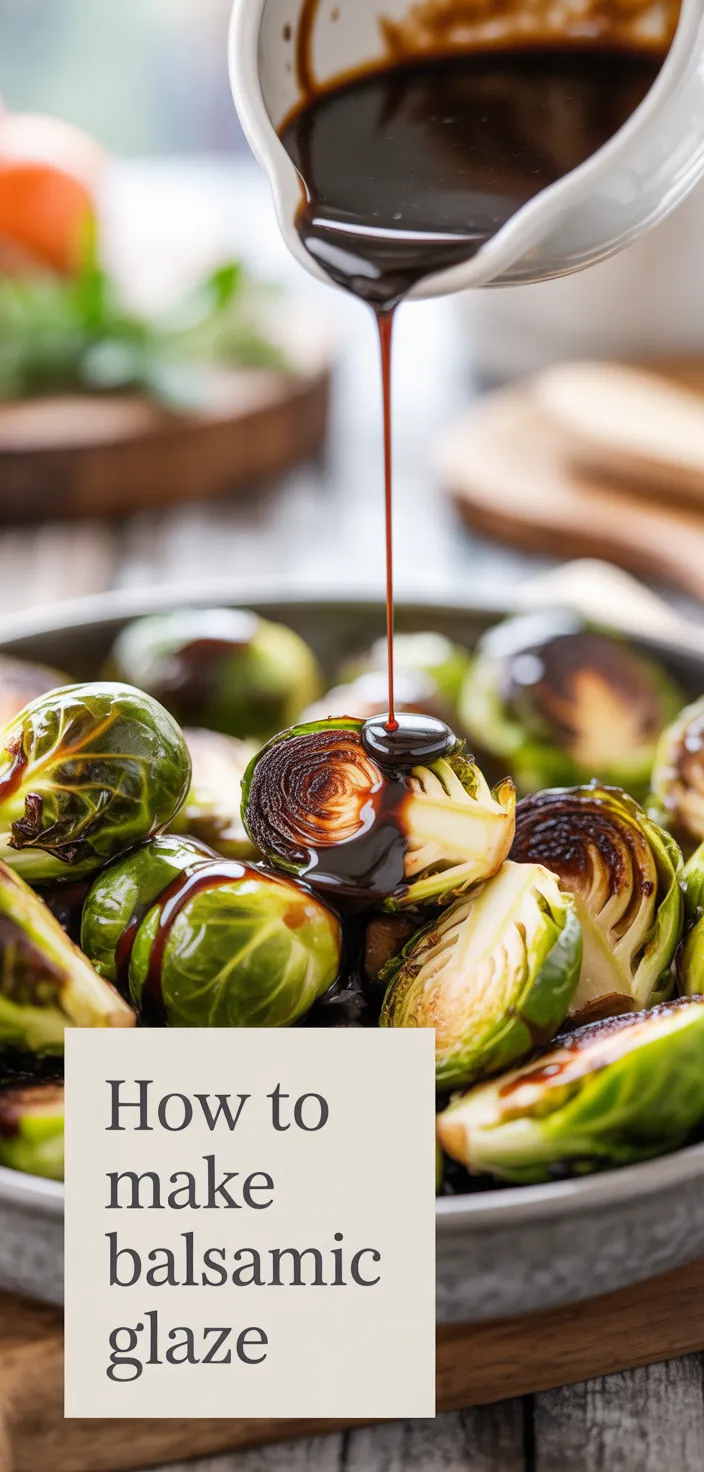
I’m obsessed with this Balsamic Glaze. I love that sticky, tangy-sweet hit from Balsamic Reduction that clings to roasted carrots and salmon and honestly makes dinner feel deliberate.
I keep it simple in my head: balsamic vinegar and maybe a touch of brown sugar when I want it naughty. The smell alone makes me stop whatever I’m doing.
And the shine. It looks like I spent ages fussing over a sauce when I didn’t.
It’s bold, not fussy. Every bite gets that puckery zip and a rich sweetness that somehow makes plain food taste like an event every damn time.
Ingredients
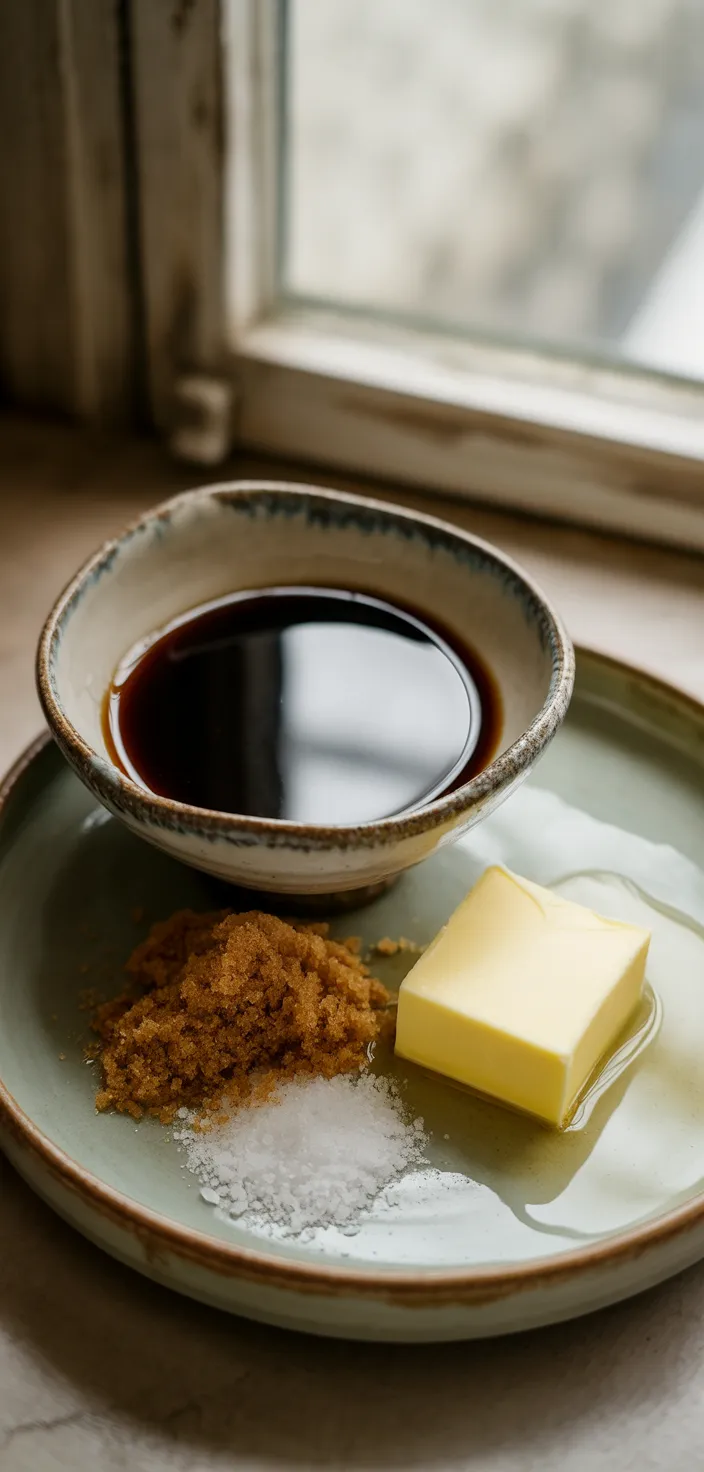
- Balsamic vinegar: tangy backbone, sweet-tart depth that makes things feel grown-up.
- Plus brown sugar or honey: adds warm sweetness, rounds acidity without tasting sugary.
- Basically a pinch of sea salt: wakes flavors, keeps it from tasting flat.
- Butter gives glossy finish and richer mouthfeel, makes it lickable.
- Water thins slightly if needed, don’t overdo it or it’ll lose punch.
Ingredient Quantities
- 1 cup balsamic vinegar, good quality but not insanely expensive
- 1 to 2 tablespoons brown sugar or honey, optional if you want it sweeter
- 1 pinch fine sea salt, to bring out the flavor
- 1 teaspoon unsalted butter, optional for a glossy finish
- 1 tablespoon water, only if you need to thin the glaze a bit
How to Make this
1. Pour 1 cup balsamic vinegar into a small heavy-bottomed saucepan and set over medium heat.
2. Add 1 to 2 tablespoons brown sugar or honey if you want it sweeter, and 1 pinch fine sea salt. Stir to dissolve the sweetener.
3. Bring the mixture to a gentle simmer, then reduce the heat so it barely bubbles. You want a slow, steady simmer not a rolling boil.
4. Let it reduce, stirring occasionally, until the volume is about half and the liquid has thickened enough to coat the back of a spoon; this usually takes 12 to 20 minutes depending on your pan and heat. Keep an eye on it because it can go from perfect to too thick fast.
5. If you want an ultra glossy finish, whisk in 1 teaspoon unsalted butter off the heat, a little at a time, until incorporated.
6. If the glaze becomes too thick as it cools, stir in up to 1 tablespoon water to loosen it to your desired consistency.
7. Taste and adjust: add a tiny bit more salt or a pinch more sugar if the vinegar is too sharp, but go slow, you can always add not take away.
8. Optional but nice: strain the glaze through a fine mesh sieve into a bowl or jar to remove any cooked bits for a smooth finish.
9. Let it cool to room temperature, it will thicken more as it cools. Store in a sealed jar in the fridge for up to 2 weeks; warm gently before using if it solidifies a bit.
Use this to drizzle over brussels sprouts, roasted carrots, salads, chicken, or salmon. Enjoy, and dont overcook it the flavor concentrates fast.
Equipment Needed
1. Small heavy-bottomed saucepan
2. Measuring cup and measuring spoons
3. Wooden spoon or silicone spatula for stirring
4. Whisk (for the butter and smoothing)
5. Fine mesh sieve (optional, for a silky finish)
6. Heatproof bowl or jar to cool and store the glaze
7. Small ladle or spoon to test consistency
8. Oven mitts or potholders for handling the hot pan
FAQ
How To Make Balsamic Glaze Recipe Substitutions and Variations
How to Make Balsamic Glaze
Ingredients
- 1 cup balsamic vinegar, good quality but not insanely expensive
- 1 to 2 tablespoons brown sugar or honey, optional if you want it sweeter
- 1 pinch fine sea salt, to bring out the flavor
- 1 teaspoon unsalted butter, optional for a glossy finish
- 1 tablespoon water, only if you need to thin the glaze a bit
Quick method
1. Pour the balsamic into a small saucepan.
2. Add the brown sugar or honey and the pinch of salt. Give it a stir.
3. Bring to a gentle simmer over medium low heat. Let it bubble very gently, uncovered, until reduced by about half and syrupy, 12 to 18 minutes depending on heat and pan. Keep an eye on it or it will burn.
4. Remove from heat, whisk in the butter if using for shine. If too thick, whisk in up to 1 tablespoon water to loosen. Let cool — it thickens more as it cools.
5. Store in the fridge in a jar for up to 2 weeks. Warm slightly before using if it firms up.
Substitutions
- Balsamic vinegar: use aged balsamic of Modena for richer flavor, or a mix of red wine vinegar + 1 teaspoon sugar if you need a cheaper stand in
- Brown sugar or honey: swap with maple syrup, agave nectar, or granulated sugar (use slightly less if using granulated)
- Fine sea salt: kosher salt or a small pinch of flaky sea salt both work, reduce flaky salts slightly since they’re more intense
- Unsalted butter: use a splash of good olive oil or a small dab of ghee if you want dairy free gloss, or omit entirely for a vegan glaze
Quick tips
– Use a wide shallow pan to speed reduction, but watch closely.
– Taste as you go, some balsamics are sweeter so you may not need extra sugar.
– If it crystallizes in the fridge, warm it gently to restore the texture.
Pro Tips
1) Keep the heat low and be patient. If it bubbles too hard it will burn and taste bitter, so adjust the burner down and stand there for a few minutes. Stir every few minutes, but don’t babysit it constantly.
2) Taste as you go. Balsamic can be all over the place in acidity and sweetness, so start with less sugar or honey than you think and add a little at a time. A tiny extra pinch of salt at the end can balance it perfectly.
3) For a glossy, clingy glaze add the butter off the heat and whisk it in quick. If you skip the butter, the glaze still works fine but it won’t look as pretty. If it gets too thick while cooling, add a teaspoon of water at a time until it pours the way you want.
4) Use the right pan and store smart. A heavy-bottomed small saucepan gives even heat and stops hotspots. Let it cool before putting it in the fridge in a sealed jar; warm it gently before using so you don’t overheat it and thin it out too much.
How To Make Balsamic Glaze Recipe
I whipped up a Balsamic Glaze that turns sad brussels and plain chicken into something dangerously addictive, and I’m not apologizing.
8
servings
38
kcal
Equipment: 1. Small heavy-bottomed saucepan
2. Measuring cup and measuring spoons
3. Wooden spoon or silicone spatula for stirring
4. Whisk (for the butter and smoothing)
5. Fine mesh sieve (optional, for a silky finish)
6. Heatproof bowl or jar to cool and store the glaze
7. Small ladle or spoon to test consistency
8. Oven mitts or potholders for handling the hot pan
Ingredients
1 cup balsamic vinegar, good quality but not insanely expensive
1 to 2 tablespoons brown sugar or honey, optional if you want it sweeter
1 pinch fine sea salt, to bring out the flavor
1 teaspoon unsalted butter, optional for a glossy finish
1 tablespoon water, only if you need to thin the glaze a bit
Directions
- Pour 1 cup balsamic vinegar into a small heavy-bottomed saucepan and set over medium heat.
- Add 1 to 2 tablespoons brown sugar or honey if you want it sweeter, and 1 pinch fine sea salt. Stir to dissolve the sweetener.
- Bring the mixture to a gentle simmer, then reduce the heat so it barely bubbles. You want a slow, steady simmer not a rolling boil.
- Let it reduce, stirring occasionally, until the volume is about half and the liquid has thickened enough to coat the back of a spoon; this usually takes 12 to 20 minutes depending on your pan and heat. Keep an eye on it because it can go from perfect to too thick fast.
- If you want an ultra glossy finish, whisk in 1 teaspoon unsalted butter off the heat, a little at a time, until incorporated.
- If the glaze becomes too thick as it cools, stir in up to 1 tablespoon water to loosen it to your desired consistency.
- Taste and adjust: add a tiny bit more salt or a pinch more sugar if the vinegar is too sharp, but go slow, you can always add not take away.
- Optional but nice: strain the glaze through a fine mesh sieve into a bowl or jar to remove any cooked bits for a smooth finish.
- Let it cool to room temperature, it will thicken more as it cools. Store in a sealed jar in the fridge for up to 2 weeks; warm gently before using if it solidifies a bit.
- Use this to drizzle over brussels sprouts, roasted carrots, salads, chicken, or salmon. Enjoy, and dont overcook it the flavor concentrates fast.
Notes
- Below you’ll find my best estimate of this recipe’s nutrition facts. Treat the numbers as a guide rather than a rule—great food should nourish both body and spirit. Figures are approximate, and the website owner assumes no liability for any inaccuracies in this recipe.
Nutrition Facts
- Serving Size: 32g
- Total number of serves: 8
- Calories: 38kcal
- Fat: 0.48g
- Saturated Fat: 0.36g
- Trans Fat: 0g
- Polyunsaturated: 0g
- Monounsaturated: 0.13g
- Cholesterol: 1mg
- Sodium: 16mg
- Potassium: 15mg
- Carbohydrates: 6.94g
- Fiber: 0g
- Sugar: 6.94g
- Protein: 0.08g
- Vitamin A: 19IU
- Vitamin C: 0mg
- Calcium: 6mg
- Iron: 0.11mg