I plated an Amalfi Coast carbonara that shimmers with glossy sauce and guanciale crisps, delivering a startlingly pure, silky finish that will make you keep scrolling.
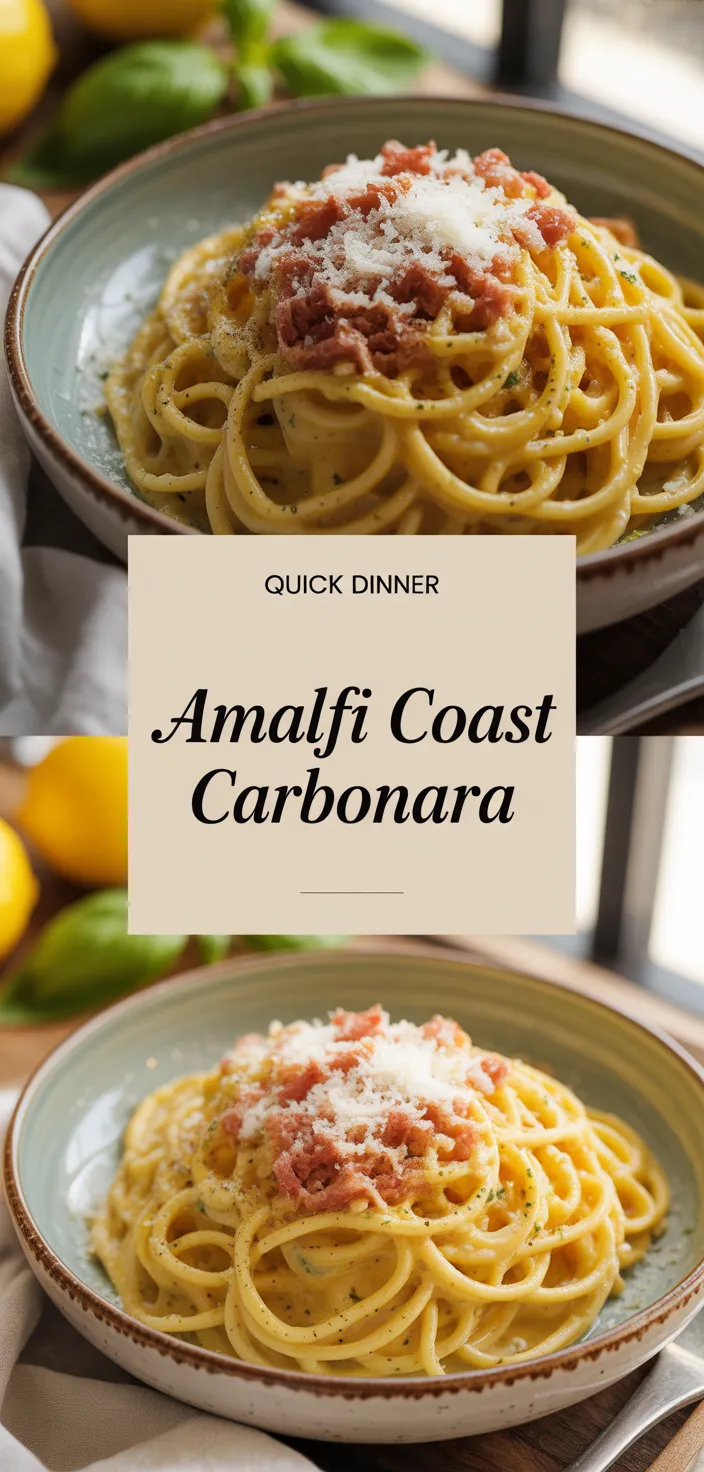
I adore this Amalfi Coast carbonara because it tastes like sun and salt without trying too hard. The guanciale renders a dark, smoky fat that sings against sharp, grassy Pecorino Romano.
I love how the sauce clings like silk to each strand in my head. But it’s the salty cheese bite that makes me obsessively reach for one more forkful.
It’s honest, loud, unapologetic pasta. I crave that quick, hot hit of umami the moment I think of Italy.
Pure, raw flavor that refuses to be polite. No filler, just glorious simplicity and nothing else now honest and utterly unpretentious
Ingredients
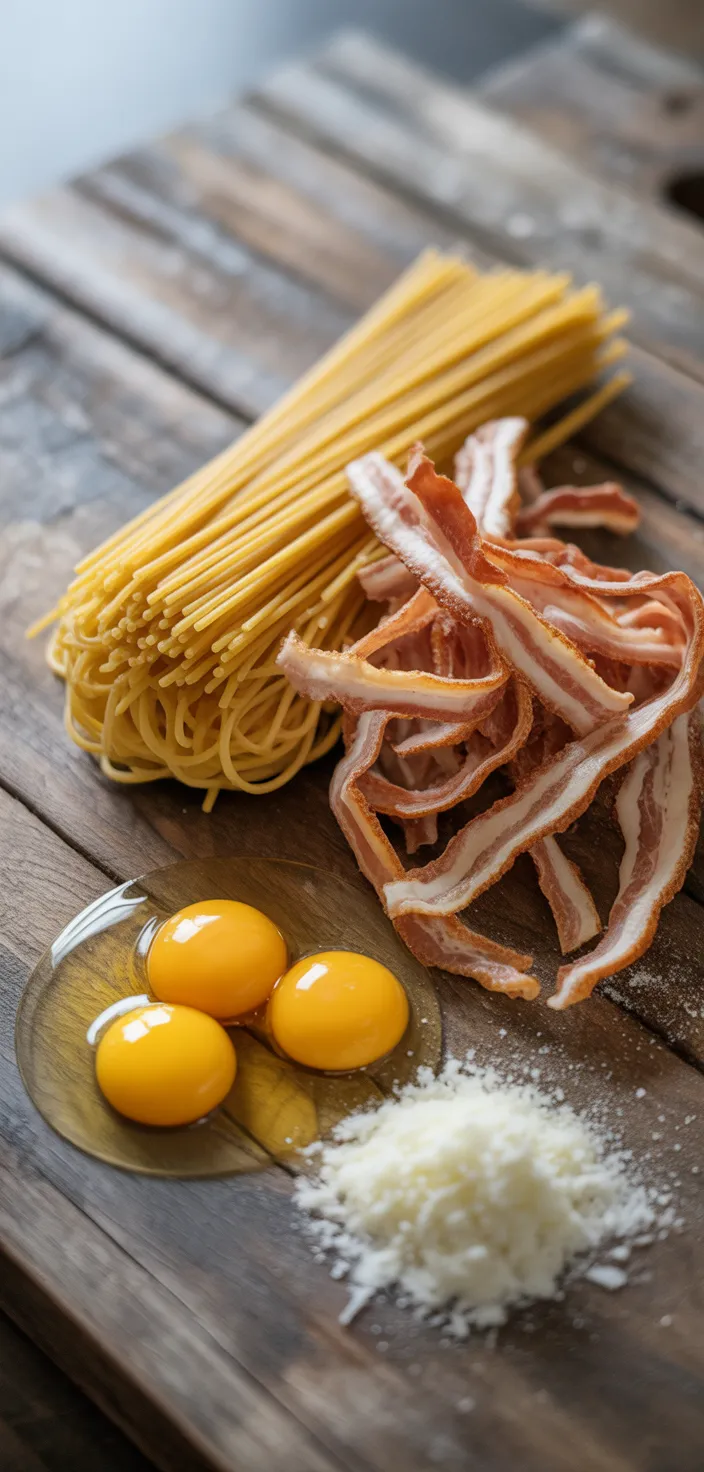
- Spaghetti — the long, comforting base that soaks up sauce; it’s simple and filling.
- Guanciale — salty, crispy pork that gives savory crunch and real Italian character.
- Whole eggs — creamy binder that’s silky when tossed with hot pasta, not stodgy.
- Extra egg yolk — adds extra richness and silk, basically makes it luxuriously smooth.
- Pecorino Romano — sharp, salty cheese that punches up flavor and mouthfeel, so tangy.
- Freshly cracked black pepper — sharp heat and aroma that cuts through the richness.
- Starchy pasta water — the secret glide, it helps make the sauce cling, not watery.
Ingredient Quantities
- Spaghetti, 400 g (about 14 oz) — enough for 4 servings
- Guanciale, 150 g to 200 g (about 5 to 7 oz), cut into small strips
- Large eggs, 3 whole eggs plus 1 extra egg yolk (room temp)
- Pecorino Romano, finely grated, 100 g (about 1 cup packed)
- Freshly cracked black pepper, 1 to 2 teaspoons (to taste)
- Coarse salt for the pasta cooking water
- Reserved starchy pasta water, about 1 cup, kept from the cooking pot
How to Make this
1. Bring a large pot of water to a rolling boil, salt it well, then add 400 g spaghetti and cook to just shy of al dente, about 1 to 2 minutes less than package says; scoop out and reserve about 1 cup of the starchy pasta water before draining.
2. While the pasta cooks, cut 150 to 200 g guanciale into small strips and set aside; it should be room temp so it renders evenly.
3. In a bowl whisk 3 whole eggs plus 1 extra egg yolk with 100 g finely grated Pecorino Romano and 1 teaspoon freshly cracked black pepper until smooth and thick; set this egg-cheese mixture aside at room temp.
4. In a large skillet over medium heat put the guanciale strips in cold pan and slowly render the fat until the meat is crisp and golden and the fat is translucent, about 6 to 10 minutes; lower the heat if it starts to burn.
5. When the guanciale is nicely crisp, add the hot drained spaghetti directly to the skillet and toss in the rendered fat so every strand is glossy; if the pan is very hot take it off the heat for a moment to cool slightly.
6. Quickly pour the egg and cheese mixture over the pasta off the direct heat and toss briskly with tongs or two forks so the eggs coat the pasta and thicken into a creamy sauce without scrambling.
7. If the sauce seems too thick or dry add reserved starchy pasta water a few tablespoons at a time, tossing constantly, until you reach a silky, clingy consistency; you may not need the full cup.
8. Taste and adjust seasoning with more freshly cracked black pepper and extra Pecorino if needed; remember guanciale and Pecorino are salty so go easy on added salt.
9. Serve immediately in warmed bowls, scattering the crispy guanciale on top and finishing with a generous crack of black pepper and a little more grated Pecorino if you like.
Equipment Needed
1. Large pot for boiling pasta, big enough so the spaghetti can move around
2. Colander to drain the pasta (and to scoop out that starchy cup of water)
3. Large heavy skillet or frying pan for rendering the guanciale and tossing the pasta
4. Tongs (or two forks) for tossing the pasta with the egg mixture without scrambling it
5. Mixing bowl and whisk for beating the eggs, yolk and grated Pecorino together
6. Box grater or microplane for finely grating Pecorino Romano
7. Chef’s knife and cutting board to slice the guanciale into small strips
8. Measuring cup and a ladle or small cup to reserve and add starchy pasta water as needed
FAQ
Authentic Pasta Carbonara (From Amalfi Coast) Recipe Substitutions and Variations
- Spaghetti
- Bucatini — thicker, with a hole in the middle that holds more sauce, so it’s a great swap
- Linguine — a bit flatter, still cooks the same and catches the sauce nicely
- Fettuccine — wider, gives a chewier bite, nice if you want more texture
- Guanciale
- Pancetta — closest pantry stand in, similar porky taste but usually less fatty
- Unsmoked slab bacon — if pancetta isn’t around, cube it and render slowly for flavor
- Prosciutto (pan-fried briefly) — milder and less fatty, crisp it up to add texture
- Pecorino Romano
- Parmigiano Reggiano — nuttier and less sharp, use a little more to match saltiness
- Grana Padano — milder cousin of parm, good if you want a softer flavor
- Mixture of Pecorino and Parm — if you only have parm, add a bit of sharp cheese or use extra black pepper
- Eggs (3 whole + 1 yolk)
- 4 whole eggs — simpler, keeps a creamier, less yolk-forward texture
- 3 whole eggs only — still works, sauce will be slightly lighter and less rich
- Pasteurized eggs — same ratios but safer if you’re worried about raw eggs
Pro Tips
1) Bring your eggs up to room temp ahead of time. Cold eggs shock and scramble more easily, so if you forget to set them out, put them in warm water for 5 to 10 minutes. It makes the sauce silkier and way easier to toss.
2) Control the heat like your life depends on it. After you add pasta to the rendered fat, take the pan off the heat before you pour in the egg-cheese mix. Toss constantly and keep it moving so the eggs thicken into a sauce and don’t turn into scrambled bits.
3) Add pasta water in tiny amounts, not all at once. A few tablespoons at a time while you toss will get you a glossy, clingy sauce. If you dump too much water you’ll thin it out and lose that creamy texture.
4) Don’t over-salt at the end. Between the cured pork and the Pecorino there’s already plenty of salt. Taste first, then add black pepper and a little extra cheese only if it needs it; fresh cracked pepper really lifts the dish, so don’t be shy with that.
Authentic Pasta Carbonara (From Amalfi Coast) Recipe
I plated an Amalfi Coast carbonara that shimmers with glossy sauce and guanciale crisps, delivering a startlingly pure, silky finish that will make you keep scrolling.
4
servings
771
kcal
Equipment: 1. Large pot for boiling pasta, big enough so the spaghetti can move around
2. Colander to drain the pasta (and to scoop out that starchy cup of water)
3. Large heavy skillet or frying pan for rendering the guanciale and tossing the pasta
4. Tongs (or two forks) for tossing the pasta with the egg mixture without scrambling it
5. Mixing bowl and whisk for beating the eggs, yolk and grated Pecorino together
6. Box grater or microplane for finely grating Pecorino Romano
7. Chef’s knife and cutting board to slice the guanciale into small strips
8. Measuring cup and a ladle or small cup to reserve and add starchy pasta water as needed
Ingredients
Spaghetti, 400 g (about 14 oz) — enough for 4 servings
Guanciale, 150 g to 200 g (about 5 to 7 oz), cut into small strips
Large eggs, 3 whole eggs plus 1 extra egg yolk (room temp)
Pecorino Romano, finely grated, 100 g (about 1 cup packed)
Freshly cracked black pepper, 1 to 2 teaspoons (to taste)
Coarse salt for the pasta cooking water
Reserved starchy pasta water, about 1 cup, kept from the cooking pot
Directions
- Bring a large pot of water to a rolling boil, salt it well, then add 400 g spaghetti and cook to just shy of al dente, about 1 to 2 minutes less than package says; scoop out and reserve about 1 cup of the starchy pasta water before draining.
- While the pasta cooks, cut 150 to 200 g guanciale into small strips and set aside; it should be room temp so it renders evenly.
- In a bowl whisk 3 whole eggs plus 1 extra egg yolk with 100 g finely grated Pecorino Romano and 1 teaspoon freshly cracked black pepper until smooth and thick; set this egg-cheese mixture aside at room temp.
- In a large skillet over medium heat put the guanciale strips in cold pan and slowly render the fat until the meat is crisp and golden and the fat is translucent, about 6 to 10 minutes; lower the heat if it starts to burn.
- When the guanciale is nicely crisp, add the hot drained spaghetti directly to the skillet and toss in the rendered fat so every strand is glossy; if the pan is very hot take it off the heat for a moment to cool slightly.
- Quickly pour the egg and cheese mixture over the pasta off the direct heat and toss briskly with tongs or two forks so the eggs coat the pasta and thicken into a creamy sauce without scrambling.
- If the sauce seems too thick or dry add reserved starchy pasta water a few tablespoons at a time, tossing constantly, until you reach a silky, clingy consistency; you may not need the full cup.
- Taste and adjust seasoning with more freshly cracked black pepper and extra Pecorino if needed; remember guanciale and Pecorino are salty so go easy on added salt.
- Serve immediately in warmed bowls, scattering the crispy guanciale on top and finishing with a generous crack of black pepper and a little more grated Pecorino if you like.
Notes
- Below you’ll find my best estimate of this recipe’s nutrition facts. Treat the numbers as a guide rather than a rule—great food should nourish both body and spirit. Figures are approximate, and the website owner assumes no liability for any inaccuracies in this recipe.
Nutrition Facts
- Serving Size: 250g
- Total number of serves: 4
- Calories: 771kcal
- Fat: 39.8g
- Saturated Fat: 15.8g
- Trans Fat: 0.13g
- Polyunsaturated: 1.5g
- Monounsaturated: 15.8g
- Cholesterol: 250.4mg
- Sodium: 1161mg
- Potassium: 582.8mg
- Carbohydrates: 75.8g
- Fiber: 3g
- Sugar: 1g
- Protein: 31.3g
- Vitamin A: 375IU
- Vitamin C: 0mg
- Calcium: 274mg
- Iron: 2.35mg