I’m sharing a simple yet elegant creamy dill salmon recipe that pairs Pan Fried Salmon with a lemon dill cream sauce to spark your curiosity.
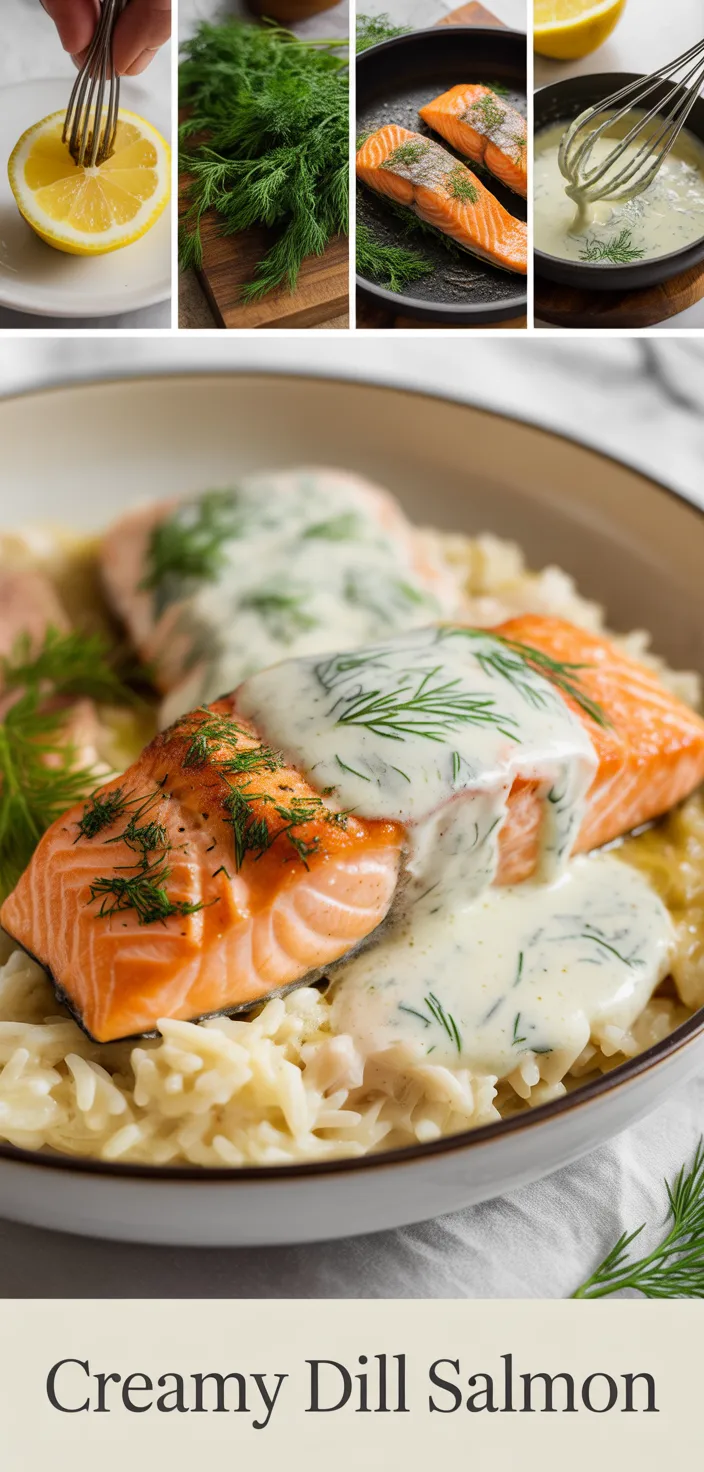
I love serving Creamy Dill Salmon when I want something simple that still feels a little special. It’s rich and silky, with heavy cream and fresh dill giving the sauce a bright, herb-y lift that somehow never gets old.
I always slot it into weeknight menus and fancy little dinners alike, and it’s become one of those Dill Salmon Recipes people expect from me. There’s a reason Pan Fried Salmon stays a go-to; it looks impressive but is forgiving, so I can chat with guests instead of fussing by the stove.
Try it once and you’ll be wondering why you waited so long.
Ingredients
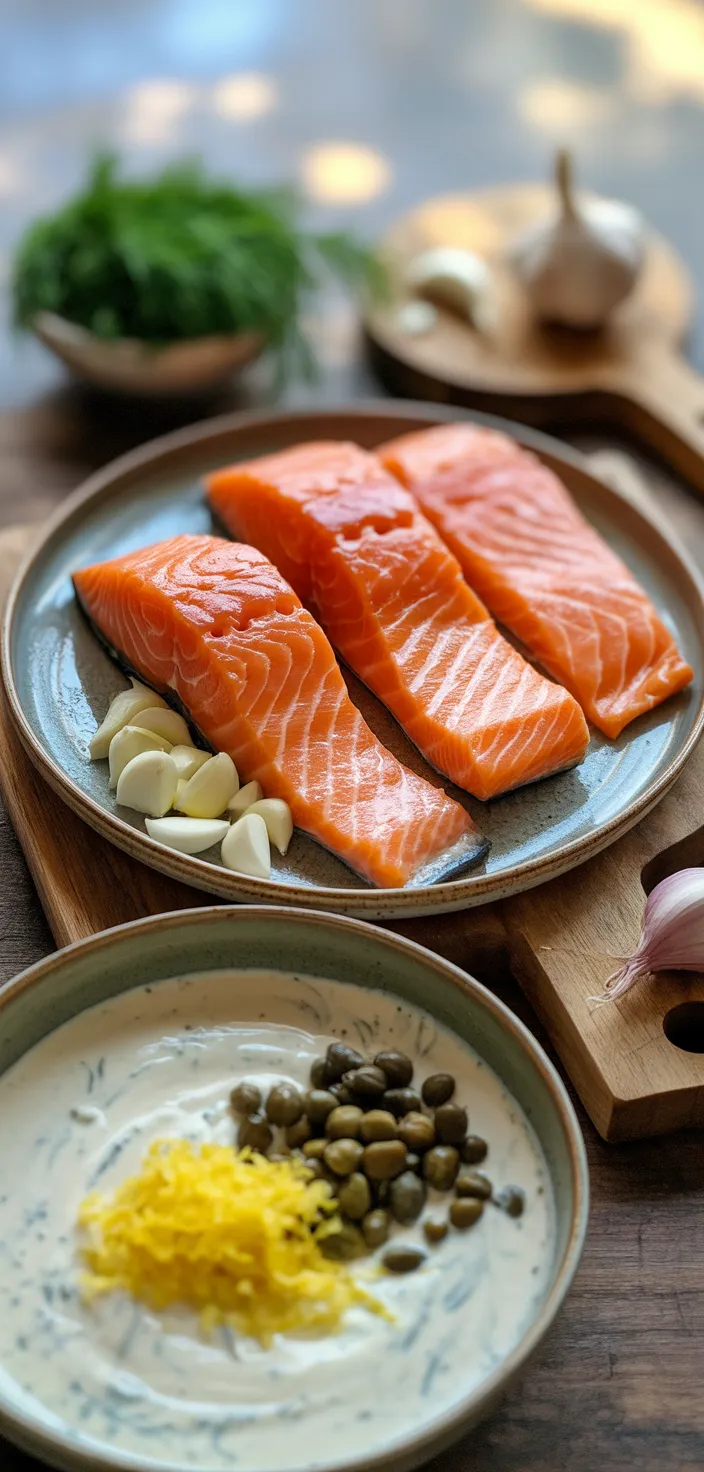
- Salmon is rich in protein and omega 3s, heart healthy and kinda oily.
- Heavy cream adds silky richness, it’s high in calories and saturated fat.
- Fresh dill gives bright herbal grassy notes, not sweet but fresh.
- Lemon juice brings sour brightness, vitamin C and cuts through richness.
- Capers add salty tangy pops, low calories but very salty if you overdo.
- Olive oil lends healthy monounsaturated fat, butter adds flavor and creaminess.
- Garlic, shallot give savory depth, small fiber and sweetish natural sugars.
- Dijon adds gentle tang, tiny carbs and helps emulsify the sauce.
- Wine or broth deglazes pan, adds acidity and subtle, low calorie flavor.
Ingredient Quantities
- 4 salmon fillets (about 6 oz each), skin on or off, your call
- kosher salt, to taste
- freshly ground black pepper, to taste
- 2 tablespoons olive oil
- 1 tablespoon unsalted butter
- 1 small shallot, finely chopped (or half a small onion)
- 2 cloves garlic, minced
- 1/4 cup dry white wine or low sodium chicken broth
- 1 cup heavy cream
- 1 teaspoon Dijon mustard
- 2 tablespoons fresh lemon juice (about 1 lemon)
- 1 teaspoon lemon zest (optional but nice)
- 2 tablespoons fresh dill, chopped
- 1 tablespoon capers, drained (optional)
How to Make this
1. Pat the salmon dry with paper towels, season both sides with kosher salt and plenty of freshly ground black pepper, skin on or off is fine.
2. Heat 1 tablespoon olive oil and the butter in a large skillet over medium-high heat until the fat shimmers. Add the salmon, skin-side down if it has skin, and sear 3 to 4 minutes without moving it so it gets a good crust.
3. Flip the fillets and cook another 2 to 4 minutes depending on thickness until almost cooked through, then transfer to a plate and tent with foil to keep warm.
4. Lower heat to medium and add the remaining 1 tablespoon olive oil if the pan looks dry. Add the finely chopped shallot and cook 1 to 2 minutes until soft, then add the minced garlic and cook about 30 seconds, don’t let it burn.
5. Pour in the 1/4 cup dry white wine or chicken broth to deglaze the pan, scraping up the brown bits, and let it reduce for about 1 to 2 minutes.
6. Stir in the 1 cup heavy cream, 1 teaspoon Dijon mustard, 2 tablespoons fresh lemon juice and the optional teaspoon lemon zest. Simmer gently until the sauce thickens slightly, about 3 to 5 minutes.
7. Taste and season the sauce with kosher salt and black pepper, then stir in the 2 tablespoons chopped fresh dill and the 1 tablespoon drained capers if using. For extra shine and richness you can stir in a little extra butter at the end.
8. Return the salmon to the pan, spoon the sauce over each fillet and warm through for 1 to 2 minutes so the flavors marry and the fish finishes cooking. Don’t overcook it or it gets dry.
9. Serve the salmon topped with more sauce, a sprinkle of fresh dill and a lemon wedge if you like. Goes great with rice, potatoes or a simple green salad.
Equipment Needed
1. Large heavy skillet (10 to 12 inch), nonstick or stainless, for searing the salmon and making the sauce
2. Tongs or a thin fish spatula, to flip fillets without breaking them
3. Chef’s knife and cutting board, for shallot, lemon and chopping the dill
4. Measuring cups and spoons, for the wine, cream, mustard and lemon juice
5. Wooden spoon or silicone spatula, to scrape up those brown bits and stir the sauce
6. Plate and a sheet of aluminum foil, to rest the salmon while the sauce finishes
7. Paper towels, to pat the salmon dry so it gets a good crust
8. Instant read thermometer, to check doneness and avoid overcooking
FAQ
Creamy Dill Salmon Recipe Substitutions and Variations
- Heavy cream (1 cup): use 1 cup full fat coconut milk for a dairy free swap, or use 3/4 cup half-and-half plus 1 teaspoon cornstarch whisked in and simmered to thicken if you want a lighter creaminess — it wont be exactly the same but it’ll work.
- Dry white wine (1/4 cup): replace with low-sodium chicken or vegetable broth 1:1 for no alcohol, or use 2 tablespoons white wine vinegar diluted with 2 tablespoons water if you want that bright acid (taste and adjust).
- Fresh dill (2 tbsp): chop fresh flat-leaf parsley 1:1 for a fresh green note, or use 1 teaspoon dried dill (since dried is stronger use less) if you dont have fresh.
- Capers (1 tbsp, optional): swap with chopped green olives for briny texture, or just add extra lemon zest and a pinch of salt for brightness if you prefer no briny bits.
Pro Tips
1) Let the fillets sit at room temp for 10 to 15 minutes and pat them really dry, it helps you get a proper sear and they cook more evenly. If you like medium doneness aim for about 125 to 130 F, remember the fish keeps cooking a bit after you take it off the heat.
2) Be gentle with the cream sauce, dont let it boil or it can split. Keep it at a low simmer and if it starts to look greasy take it off the heat and whisk in a cold pat of butter or a splash of cold water to bring it back together.
3) Deglaze the pan well and reduce the wine or broth before adding the cream, that gives the sauce depth without tasting boozy. Also cook the shallot until soft but not brown, burnt shallot = bitter sauce.
4) For crispy skin press the fillet down with a spatula for the first 20 to 30 seconds of searing, then leave it alone. Finish the dish with lemon and fresh dill at the end, they brighten the whole thing, and use capers sparingly so they dont overpower the salmon.
Creamy Dill Salmon Recipe
I’m sharing a simple yet elegant creamy dill salmon recipe that pairs Pan Fried Salmon with a lemon dill cream sauce to spark your curiosity.
4
servings
672
kcal
Equipment: 1. Large heavy skillet (10 to 12 inch), nonstick or stainless, for searing the salmon and making the sauce
2. Tongs or a thin fish spatula, to flip fillets without breaking them
3. Chef’s knife and cutting board, for shallot, lemon and chopping the dill
4. Measuring cups and spoons, for the wine, cream, mustard and lemon juice
5. Wooden spoon or silicone spatula, to scrape up those brown bits and stir the sauce
6. Plate and a sheet of aluminum foil, to rest the salmon while the sauce finishes
7. Paper towels, to pat the salmon dry so it gets a good crust
8. Instant read thermometer, to check doneness and avoid overcooking
Ingredients
4 salmon fillets (about 6 oz each), skin on or off, your call
kosher salt, to taste
freshly ground black pepper, to taste
2 tablespoons olive oil
1 tablespoon unsalted butter
1 small shallot, finely chopped (or half a small onion)
2 cloves garlic, minced
1/4 cup dry white wine or low sodium chicken broth
1 cup heavy cream
1 teaspoon Dijon mustard
2 tablespoons fresh lemon juice (about 1 lemon)
1 teaspoon lemon zest (optional but nice)
2 tablespoons fresh dill, chopped
1 tablespoon capers, drained (optional)
Directions
- Pat the salmon dry with paper towels, season both sides with kosher salt and plenty of freshly ground black pepper, skin on or off is fine.
- Heat 1 tablespoon olive oil and the butter in a large skillet over medium-high heat until the fat shimmers. Add the salmon, skin-side down if it has skin, and sear 3 to 4 minutes without moving it so it gets a good crust.
- Flip the fillets and cook another 2 to 4 minutes depending on thickness until almost cooked through, then transfer to a plate and tent with foil to keep warm.
- Lower heat to medium and add the remaining 1 tablespoon olive oil if the pan looks dry. Add the finely chopped shallot and cook 1 to 2 minutes until soft, then add the minced garlic and cook about 30 seconds, don't let it burn.
- Pour in the 1/4 cup dry white wine or chicken broth to deglaze the pan, scraping up the brown bits, and let it reduce for about 1 to 2 minutes.
- Stir in the 1 cup heavy cream, 1 teaspoon Dijon mustard, 2 tablespoons fresh lemon juice and the optional teaspoon lemon zest. Simmer gently until the sauce thickens slightly, about 3 to 5 minutes.
- Taste and season the sauce with kosher salt and black pepper, then stir in the 2 tablespoons chopped fresh dill and the 1 tablespoon drained capers if using. For extra shine and richness you can stir in a little extra butter at the end.
- Return the salmon to the pan, spoon the sauce over each fillet and warm through for 1 to 2 minutes so the flavors marry and the fish finishes cooking. Don't overcook it or it gets dry.
- Serve the salmon topped with more sauce, a sprinkle of fresh dill and a lemon wedge if you like. Goes great with rice, potatoes or a simple green salad.
Notes
- Below you’ll find my best estimate of this recipe’s nutrition facts. Treat the numbers as a guide rather than a rule—great food should nourish both body and spirit. Figures are approximate, and the website owner assumes no liability for any inaccuracies in this recipe.
Nutrition Facts
- Serving Size: 260g
- Total number of serves: 4
- Calories: 672kcal
- Fat: 54g
- Saturated Fat: 21g
- Trans Fat: 0.2g
- Polyunsaturated: 6g
- Monounsaturated: 18g
- Cholesterol: 184mg
- Sodium: 300mg
- Potassium: 930mg
- Carbohydrates: 3g
- Fiber: 0.3g
- Sugar: 1.5g
- Protein: 36g
- Vitamin A: 840IU
- Vitamin C: 4mg
- Calcium: 40mg
- Iron: 1.1mg